Decentralized Consensus
bitcoin·@aniqtariq·
0.000 HBDDecentralized Consensus
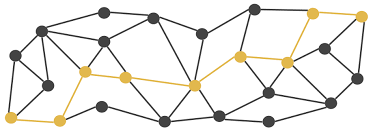 <p>the global public ledger (list) of all transactions, which everyone in the bitcoin network accepts as the authoritative record of ownership.</p> <p>But how can everyone in the network agree on a single universal “truth” about who owns what, without having to trust anyone? All traditional payment systems depend on a trust model that has a central authority providing a clearinghouse service, basically verifying and clearing all transactions. Bitcoin has no central authority, yet somehow every full node has a complete copy of a public ledger that it can trust as the authoritative record. The blockchain is not created by a central authority, but is assembled independently by every node in the network. Somehow, every node in the network, acting on information transmitted across insecure network connections, can arrive at the same conclusion and assemble a copy of the same public ledger as everyone else. This chapter examines the process by which the bitcoin network achieves global consensus without central authority.</p> <p>Satoshi Nakamoto’s main invention is the decentralized mechanism for <i>emergent consensus</i>. Emergent, because consensus is not achieved explicitly — there is no election or fixed moment when consensus occurs. Instead, consensus is an emergent artifact of the asynchronous interaction of thousands of independent nodes, all following simple rules. All the properties of bitcoin, including currency, transactions, payments, and the security model that does not depend on central authority or trust, derive from this invention.</p> <p>Bitcoin’s decentralized consensus emerges from the interplay of four processes that occur independently on nodes across the network:</p> <ul> <li>Independent verification of each transaction, by every full node, based on a comprehensive list of criteria</li> <li>Independent aggregation of those transactions into new blocks by mining nodes, coupled with demonstrated computation through a Proof- of-Work algorithm</li> <li>Independent verification of the new blocks by every node and assembly into a chain</li> <li>Independent selection, by every node, of the chain with the most cumulative computation demonstrated through Proof-of-Work</li> <center><h1>NOTE</h1></center> <center>if you learn anything from this please sure make to upvote and support so i get inspired and will make more infromative article thanks</center> </ul>