Voice-Controlled Multi-Functional Smart Home Automation System
iot·@rakibulce·
0.000 HBDVoice-Controlled Multi-Functional Smart Home Automation System
Current availability of interactive technologies infrastructure such as internet bandwidth, increased processing power and connectivity through mobile devices at affordable costs have led to new concepts related to human living. 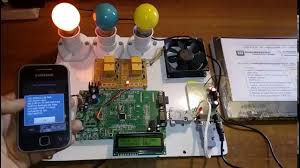 Smart cities, smart life and internet of things etc. are few such evolving research domains. A prominent concept among these is ‘Smart Home’, which involves automation and interactive technologies. This paper proposes a multi-functional ‘Smart Home Automation System’ (SHAS), where users can use voice-commands to control their home-appliances and gadgets, for different functionalities and purposes. The proposed system can be adapted to a user’s voice and recognise the voice-commands, independent of the speaker’s personal characteristics such as accent. The system is aimed to be cost-effective, flexible and robust. The voice command recognition is achieved using a dedicated hardware module and an Arduino micro-controller board for commands processing and control. Performance evaluation is carried out by developing a multi-functional miniature prototype of the SHAS. Results of the experiments conducted are quite promising. The prototype SHAS can be used for converting existing homes into smart homes at relatively low cost and with convenience. Keywords: smart home automation system, voice-command recognition, multi-functions, multi-sensor, voice-command I. INTRODUCTION A smart home is a home that provides its residents the comfort, convenience and ease of operation of devices at all times, irrespective of where the resident actually is within the house. A smart home usually consists of electrical appliances such as lighting, fans, air-conditioners, room-heaters, air-coolers and microwave oven etc.; and electronic gadgets such as television, computers, audio systems, laptops, music-systems and mobile devices etc. All these appliances and gadgets can be connected and controlled remotely, over a secure channel using WiFi or internet through software application, from within or outside the house. A smart home consists of three elements: (i) internal home network, (ii) intelligent control and (iii) home automation with wired/wireless access gateways. These systems and devices within a home can also be managed either from inside home, or can be linked to services and systems from outside the home [1]. These appliances and gadgets are generally connected to specific sensors, so as to make these automatically adapted to certain situations and in-turn make the occupants feel comfortable. An adaptive smart home would be the one that [978-1-4673-6540-6/15/$31.00 c 2015 IEEE] utilizes machine-learning techniques to discover patterns in the residents’ daily activities, and generate automation rules and actions that mimic these actions [2]. Once these systems become aware of the requirements of residents, the residents can then be provided with a better living experience, by predicting their future needs and perform routine tasks. The aim would be to reduce physical movements and labour by the humans, by sensing and proactively responding to their needs. This important application domain is predicted to steadily increase in the future [3], [4]. In recent years, more research on smart homes has been carried out in applying the principles of ubiquitous computing. A smart home adjusts its functions as per the inhabitants’ needs, according to the information it collects from the residents, home computers and context. In such an intelligent environment the steps involving the information processing and network technology are transparent to the user. Interaction between the smart home and its devices here usually takes place via advanced ‘natural’ user interaction techniques involving human-speech [5]. An essential part of a SHAS is to enable the various electrical devices and electronic gadgets in it to interact and communicate with each other. In SHAS, simple remote-controlled systems to complex computer/micro-controlled home automation technologies and different wired/wireless technologies may be used for this. Few widely used wireless technologies with globally accepted standards are: GSM, Wi-Fi, NFC and Bluetooth. These can be used to communicate with the smart electrical devices via smart mobile devices such as smartphone or tablet [6]. A SHAS can make use of multiple interactive technologies such as voice-recognition, gesture-control, retina eye movement and more. In this paper, we use voice-recognition to control smart home appliances. Moving away from the traditional methods such as keyboard or switches to control the devices, voicecontrol is one of the easiest methods to give input commands. Also, voice recognition is a more personalized form of control, since it can be adapted and customized to a particular speaker’s voice. Voice recognition differs distinctly from speech recognition. In speech recognition the subject of analysis is the spoken text, while in voice recognition the subject of analysis is the voice of speaker and the spoken text remains secondary here,