Lessons From Working as a Hypnotherapist
life·@surgo·
0.000 HBDLessons From Working as a Hypnotherapist
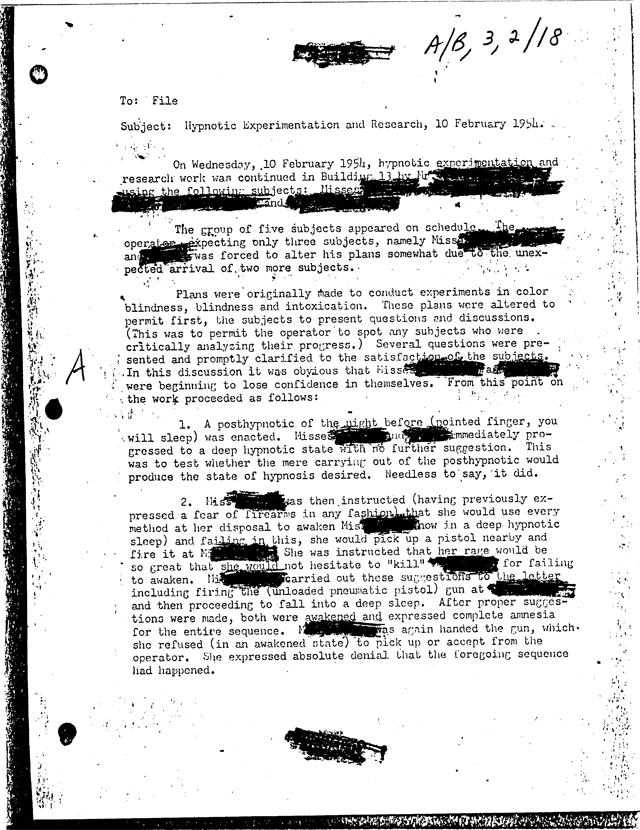 I've worked in hypnotherapy for three years. Before that, I was a member of cults, occult groups, and what some would call "dangerous sects". Both those experiences have been massively helpful in my growth. Here's some of the lessons I've learned, and how you can use them to better your life. ## People Make Decisions Based on Emotions Some might say this is common sense. Yet how many times have you tried to explain something rationally, logically, to another person? How many of those times have you failed? Chances are, whenever you failed, you didn't address the emotional aspect. Their relationship with the idea. Their relationship with the consequences of the idea. Listening to how people talk about certain things can help you pin-point what the problem is, and work with that. ## People Lie To Themselves We all do. Most of the time we don't even realize it. Decisions are made *before* we are conscious of them. Then we make up excuses for our actions. Sometimes they're reasonable, sometimes they're not. Sometimes, when they're unreasonable, we aren't able to integrate what we did with who we think we are (our self-image). This is the reason why sometimes we do things which later make no sense to us. This means that if you're able to soothe people emotionally, you'll have a much easier time making friends. And selling. ## Anxiety Is A Protective Mechanism We get anxious when we anticipate that something bad is going to happen. It's useful. It protects us from bad decisions. Sometimes it's not useful. When it turns pathological. When it stops us from doing what we know we should. Confidence is a myth. It doesn't stem from an inflated ego. It doesn't stem from knowing you can deal with a situation (which can be helpful). Confidence is the *lack* of anxiety. It can't be explained very well in words (at least I've never seen it explained well). Because it operates on a completely subconscious (non-verbal, emotional) level. ## Conscious Awareness is Secondary This is a big one. Emotions drive behaviors. Emotions work on the low, day to day level of life. They help us act, and keep on going. The intellect (conscious, neocortical processing) is secondary to that. It's a layer "on top of". It adjusts and rationalizes actions. It plans. It works on a very abstract level, in comparison. Dissociated from reality as such. This means that if you're able to make someone feel good about something... they're going to find reasons to feel good about it on their own. This is also why people get stuck in bouts of depression, melancholy, or sadness. Your emotional state attracts thoughts which align with it. ## Persuasion is Everywhere It's a powerful idea. Whether you're talking to your spouse, or your boss, you're exerting influence on them. If you're talking to your kids, you're passing ideas, feelings, and emotions into their minds. When you're selling, you're doing the exact same thing. Teaching, Coaching, Mentoring, Writing, Talking. Any form of communication is, at its very core, persuasion. Once you realize that, understanding what salespeople, mentors, coaches, and teachers are doing becomes natural. ## Your Brain is Hackable You might not think it is. But when you take a closer look at neuropsychology, and the way we learn, it becomes obvious. We learn by association. "A" stands for the sound we make when we read it. "Orange" stands for the color we see when we see it. In the same way, we associate emotions with sensory experiences we have. For example, imagine someone being stabbed by a killer. They see a puddle of water as it's happening. There's a good chance their brain will develop a phobia of water, if they survive. In the same way, it's very possible to influence what people feel, by eliciting their emotions and associating them with a stimulus (such as touch, sight, or color). Tom Vizzini's YouTube channel is a great resource for this kind of thing. ## Closing Words *"People will do anything for those who encourage their dreams, justify their failures, allay their fears, confirm their suspicions, and help them throw rocks at their enemies."* -- Blair Warren There's a lot more to be said about each one of those topics. However, this is only a quick overview. Just using the general principles outlined here, you're able to both understand people better, and influence people in a positive way. Building relationships becomes easy. Keeping them becomes easier. Taking them to the next level still requires a bit of work, but these things make it significantly easier. ------------------------------------- If you found this useful, and would like to see more content like this, *Upvote, Follow, Resteem.* Sincerely, *Phil* ***[The Copytist](http://copytist.com)*** PS. The source for the image is CIA Mori ID 190684.